DEFROSTING
MEAT - FISH - VEGETABLES
Tempering and Defrosting
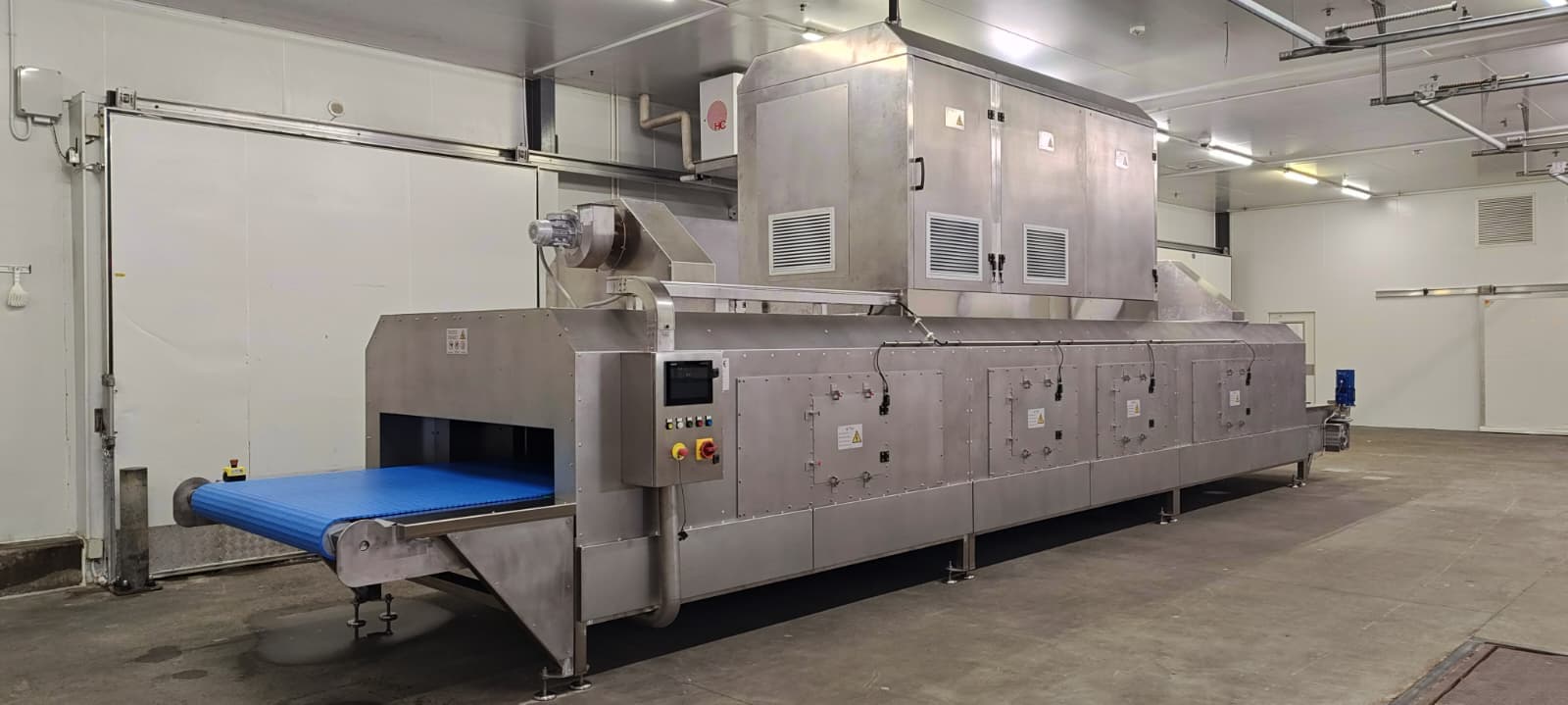
The use of Radio Frequency (RF) technology offers notable advantages for reducing drip losses and preventing product deterioration due to bacterial growth. This method is fast, uniform, and highly controllable, delivering exceptional flexibility in production scheduling and proving ideal for a wide range of tempering, softening, and defrosting applications. Our RF systems have been developed for both continuous and batch operation, enabling seamless integration into diverse production lines. When the RF generator applies a high-frequency alternating voltage between the capacitor plates, the water molecules in the frozen product vibrate and rotate in an attempt to align with the rapidly changing polarities of the plates. This molecular friction generates heat quickly and uniformly throughout the entire product mass, regardless of size, weight, shape, or thermal conductivity. The heat generated and the defrosting time can be precisely tuned by adjusting the electrode voltage and the conveyor belt speed, ensuring exact and efficient defrosting according to specific requirements. RF technology thereby reduces drip losses, minimizes product deterioration from bacterial growth, and provides fast, uniform, and controllable heating with the flexibility needed for diverse tempering, softening, and defrosting processes. The interaction between the RF field and the frozen product’s water molecules yields rapid and even thawing across the entire product, with heat intensity and duration finely adjustable through voltage control and conveyor speed to achieve optimal defrosting outcomes.
Defrosting of Meat
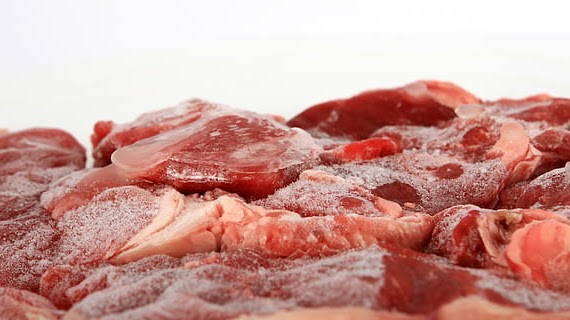
Common Materials: Beef - Pork - Chicken - Turkey - Lamb
Common Products: Individual pieces (cuts) - Blocks - Thin and thick products - Bone-in and boneless cuts - Lean and fat meat - Squared and irregular shapes - Packaged Products
Radio Frequency (RF) technology guarantees the swift and consistent tempering of sizable meat blocks or individual pieces, such as cuts. This process significantly enhances the product yield by minimizing drip loss, ensuring that more of the valuable juices and moisture remain within the meat. As a result, the meat retains its weight and quality, leading to improved profitability for businesses.The rapid and uniform tempering achieved through RF technology enables the meat to reach the desired temperature efficiently. This temperature is crucial for subsequent processes like grinding, cutting, slicing, portioning, forming, dicing, mincing, flaking, tumbling, marinating, deboning, and more. With RF defrosting, the meat can be brought to the correct temperature quickly and consistently, allowing for seamless and efficient further processing. RF defrosting is highly effective for all types of meat, regardless of their shape, size, or fat content. Whether it's large cuts or smaller pieces, lean or fatty meat, RF technology ensures efficient and uniform defrosting throughout the entire product. This versatility makes RF an ideal solution for various meat processing operations, providing consistent results and maximizing the value of the meat. By utilizing RF technology for defrosting, businesses in the meat industry can achieve significant advantages. The efficient tempering process minimizes drip loss, improving the overall yield and reducing product waste. Moreover, the uniform and rapid defrosting ensures that the meat is ready for subsequent processes, allowing for streamlined operations and increased productivity. Overall, RF technology offers a reliable and efficient solution for tempering meat, regardless of its characteristics. The benefits include enhanced yield, improved product quality, and optimized processing operations, making it a valuable tool for the meat industry.
Common products rates:
- Pork Shoulder (20% fat)Block 20 kg From -12°C to -4 / -1°C in 18 minutes
- Beef Trimming (70-85% VL) Block 15 kg From -18°C to -7 / -4°C in 12 minutes
- Chicken Drumsticks Cardboard box 10 kg From -18°C to -2 / +2°C in 30 minutes
- Pork Trim (72% lean) Block 27 kg From -18°C to -2°/ 0°C in 40 minutes From -18°C to -4°/ -2°C in 20 minutes
- Pork Skinless Belly Block 5 kg From -18°C to -5 / -3°C in 15 minutes
- Beef Trimmings (7% fat) Block 20 kg From -18°C to -3 / 0°C in 25 minutes
- Beef Trimming (95% VL) Block 20 kg From -18°C to -4 / -2°C in 30 minutes
- Pork back Vacuumed bag 10 kg From -20°C to -5 / -2°C in 20 minutes
- Beef Block 25 kg From -20°C to -8 / -6°C in 20 minutes From -20°C to -4 / -2°C in 35 minutes
- Pork (20% fat) Block 16 kg in vacuumed bag From -12°C to -4 / 0°C in 18 minutes
- Beef Kidney Block 23 kg From -18°C to -4 / -1°C in 30 minutes
- Whole Chicken Cardboard Box 10 kg From -18°C to -2 / 0°C in 30 minutes
- Beef Trimmings (15% fat) Block 20 kg From -18°C to -4 / 0°C in 25 minutes
- Beef Tongue Vacuumed bag 2.2 kg From -18°C to -3 / 0°C in 20 minutes
- Chicken Breast Fillet Cardboard box 10 kg From -18°C to -3 / 0°C in 30 minutes
- Beef Trimming (90% VL) Block 20 kg From -18°C to -3 / 0°C in 40 minutes
- Pork Shoulder 4D Boneless Block 27 kg From -18°C to -4 / -1°C in 40 minutes
- Pork Loins Block 20 kg From -20°C to -2 / 0°C in 30 minutes
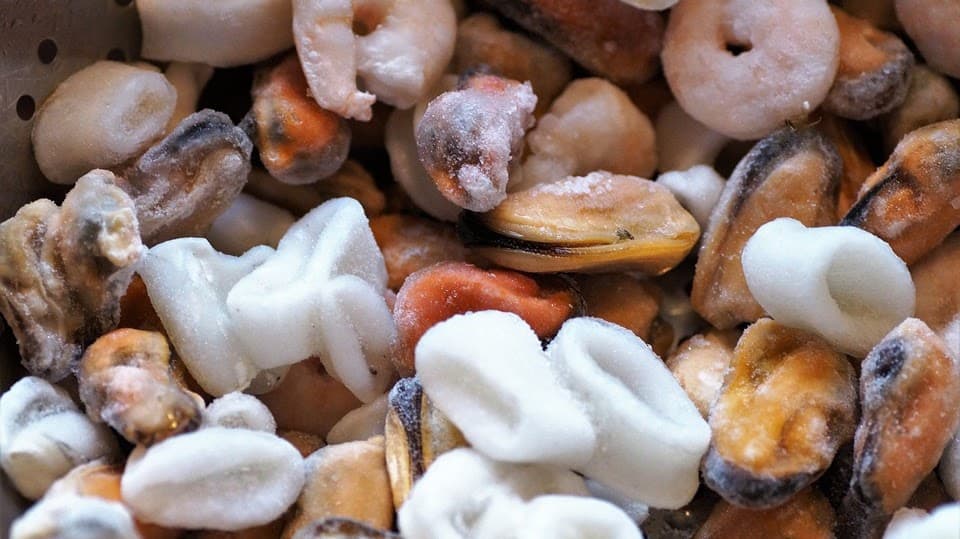
Defrosting of Fish
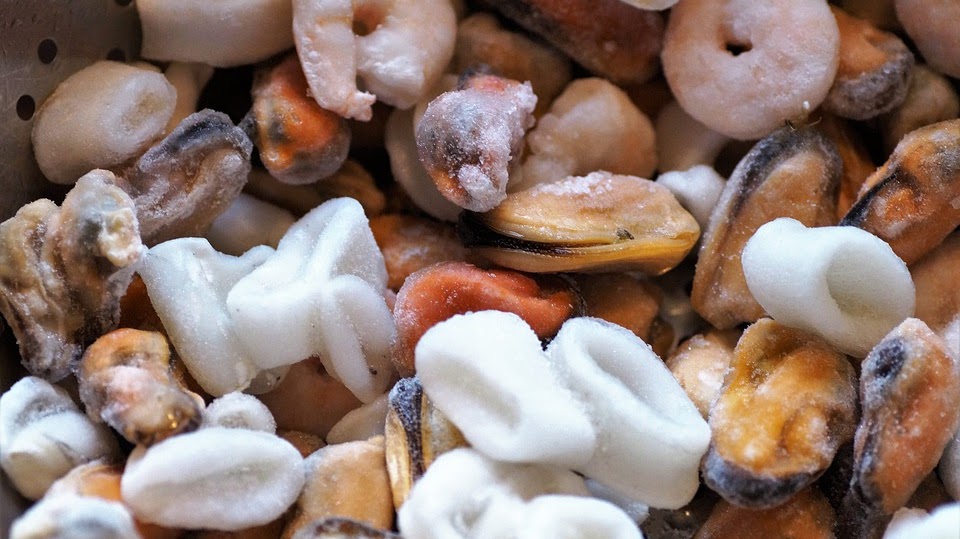
Common Materials: All kinds of Fish - Seafood - Shell Fish - Mollusks
Common Products: IQF and blocks - Whole fish - Fillets - Portions and minced fish - Flat and round fish - With and without packaging
The use of Radio Frequency (RF) tempering process allows for the rapid and gentle treatment of fish and seafood, preserving their physical, biological, and nutritional properties. This ensures that the products maintain their freshness and healthiness, meeting the highest quality standards. Through the RF tempering process, fish and seafood are brought to the desired temperature efficiently and uniformly, without compromising their integrity. This gentle method prevents damage to the delicate texture and structure of the products, preserving their natural flavors, nutrients, and overall quality. The correctly tempered fish and seafood are then ready for subsequent processes such as re-packing, sawing, cutting, portioning, grinding, forming, gutting, cooking, marinating, and more. The precise temperature achieved through RF tempering ensures that these processes can be carried out effectively and efficiently, allowing for seamless production and optimal results. By employing RF technology for tempering, the fish and seafood industry can ensure the preservation of product freshness and healthiness. The rapid and gentle nature of RF tempering minimizes the risk of bacterial growth, maintains the natural attributes of the products, and prolongs their shelf life. In summary, RF tempering offers a fast and gentle solution for fish and seafood, preserving their physical, biological, and nutritional integrity. This ensures the freshness, healthiness, and overall quality of the products, while also facilitating subsequent processing steps to meet specific industry requirements.
Common products rates:
- IQF Squid 2 bags 500 g/each in cardboard box From -20°C to -4 / -2°C in 15 minutes
- Mackerel Block 25 kg From -20°C to -4 / -1°C in 20 minutes
- Emperor fish Half fish 20-25 kg From -20°C to -6 / -3°C in 20 minutes
- Sardine Block 10 kg From -20°C to -3 / -1°C in 25 minutes
- IQF Shrimps Cardboard box 10 kg From -18°C to -3 / 0°C in 18 minutes
- IQF Scallops 4 bags 250 g/each in cardboard box From -20°C to -5 / -4°C in 15 minutes
- Squids Block 12 kg From -20°C to -4 / -1°C in 20 minutes
- Salmon Fillets Block 8 kg From -20°C to -3 / -1°C in 35 minutes
- Breaded Prawns 20 trays 230 g/each in plastic crate From -20°C to -5 / -2°C in 10 minutes
- Shrimps 2 bags 500 g/each in cardboard boxFrom -20°C to -4 / -1°C in 15 minutes
- Salmon Headed whole fish approx. 3 kg From -20°C to -3 / 0°C in 20 minutes From -20°C to -2 / 0°C in 30 minutes
- Cooked Crayfish tail meat 2 kg bags in cardboard box (12 kg in total) From -18°C to -1 / +2°C in 20 minutes
- Tilapia IQF fillets From -20°C to -2 / +1°C in 10 minutes
- Calamari IQF rings From -20°C to -5 / -3°C in 10 minutes
- Mussels 2 bags 500 g/each in cardboard box From -20°C to -4 / -2°C in 10 minutes
- Tuna chunks Vacuumed bag approx. 2 kg From -18°C to -6 / -4°C in 25 minutes
- Mixed Seafood 6 trays 270 g/each in cardboard box From -20°C to -5 / -3°C in 10 minutes
Defrosting of Vegetables
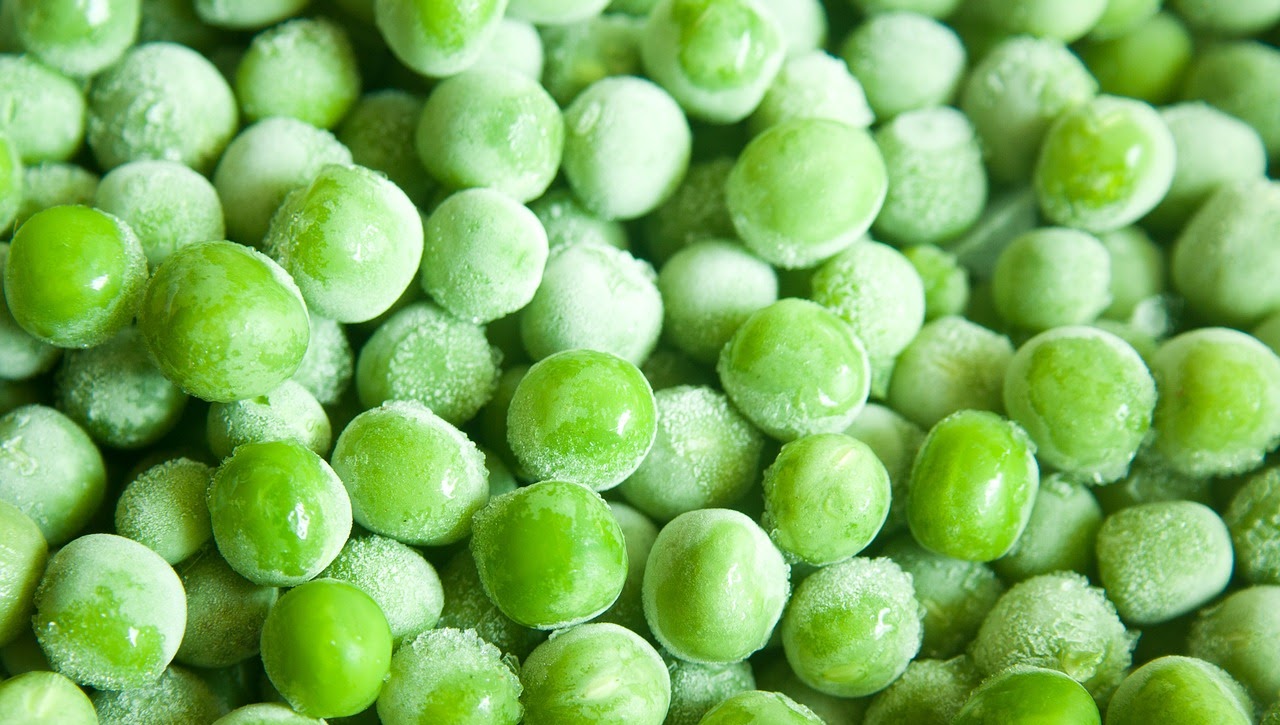
Common Materials: Vegetables - Fruits - Mushrooms*
Common Products: All kinds of vegetables - Fruits - Butter - Margarine - Ready meals for catering and retail - Fruit purees - Juices and vegetable soups - IQF and blocks - Bulk and packaged products
The application of Radio Frequency (RF) tempering significantly reduces the drip loss experienced during the thawing of frozen fruits and vegetables, thereby preserving their texture, flavor, and freshness to a high degree. With RF tempering, the thawing process is carried out efficiently and uniformly, minimizing the release of excess liquid from the products. This reduction in drip loss helps maintain the natural characteristics of the fruits and vegetables, including their texture, taste, and overall quality. By achieving the desired temperature quickly and evenly, RF tempering ensures that the thawed fruits and vegetables are ready for subsequent processes or immediate use. Whether it's for further processing, such as slicing, dicing, blending, or for direct consumption, the products can be obtained at the optimal temperature required. The benefits of RF tempering extend beyond preserving the quality of the fruits and vegetables. By minimizing drip loss, RF technology also helps to maximize the yield, reducing product waste and improving overall efficiency. In summary, RF tempering offers a superior solution for thawing frozen fruits and vegetables by minimizing drip loss and maintaining their texture, flavor, and freshness. This enables the products to be obtained at the desired temperature for seamless integration into subsequent processes or immediate consumption.
Common products rates:
- Crushed Pineapple Block 10 Kg From -19°C to -1.0/-2.0 in 40 minutes
- Spinach Block 20 kg From -18°C to -1 / +2°C in 10 minutes
- Carrot juice Block 10 Kg From -19°C to -1.0/-2.0 in 48 minutes
- Egg white Block 10 Kg From -18°C to -1.5/-2.0 in 42 minutes
- Raw Bread Dough before proving Piece 330 g From -20°C to -2 / +10°C in 10 minutes
- Butter Packed block 25 kg From -18°C to -3 / +4°C in 40 minutes
- IQF Strawberries Block 10 Kg From -18°C to -1.0/-3.0 in 19 minutes
- Soft Cheese Packages 350 gr From -18°C to -2 / +6°C in 15 minutes
- Coconut juice Block 10 Kg From -19°C to -1.0/-2.0 in 40 minutes
- Raw Bread Dough after proving Piece 330 g From -20°C to 0 / +10°C in 10 minutes
- Kiwi Puree Block 20 Kg From -19°C to -1.5/-3.0 in 35 minutes
- Carrots Block 20 kg From -18°C to -1 / +1°C in 15 minutes
- Onion Block 20 kg From -18°C to -2 / 0°C in 15 minutes
The FLUX Advantage
Defrosting in minutes
By harnessing the power of Radio Frequency (RF) technology, the defrosting time is drastically reduced, allowing for swift and efficient thawing of products. Even large blocks can be defrosted rapidly, minimizing the time required for the process. Furthermore, the versatility of RF technology enables defrosting to take place inside the packaging itself, eliminating the need to remove the product for thawing. This feature provides convenience and preserves the integrity of the packaging, making it well-suited for storage and distribution purposes.
No product degradation
The rapid and consistent nature of the process plays a crucial role in maintaining the quality of the product. By minimizing the time the product is exposed to unfavorable conditions, such as temperature fluctuations or prolonged exposure to microbes, the risk of deterioration is greatly reduced. This helps to preserve the product's desirable characteristics, such as taste, texture, aroma, color, and nutritional value. Furthermore, the uniformity achieved during the process ensures that each part of the product receives the same treatment, eliminating any variations in quality within the batch. This consistency contributes to the overall preservation of the product's quality, as any potential hotspots or areas of inadequate treatment are eliminated.
Higher product yield
With Radio Frequency (RF) technology, it is possible to achieve precise tempering temperatures of -3°C to -1°C without any drip loss. This means that the weight losses, which can reach up to 8% with conventional defrosting methods, are completely eliminated. This significant improvement in yield leads to immediate economic benefits for businesses.
Proven Solutions
Real-world implementations of our customized technology.

MEAT FACTORY
Victoria, Australia